Subscribe to trusted local news
If you are accessing this story via Facebook but you are a subscriber then you will be unable to access the story. Facebook wants you to stay and read in the app and your login details are not shared with Facebook. If you experience problems with accessing the news but have subscribed, please contact subscriptions@thestrayferret.co.uk. In a time of both misinformation and too much information, quality journalism is more crucial than ever. By subscribing, you can help us get the story right.
- Subscription costs less than £1 a week with an annual plan.
Already a subscriber? Log in here.
27
Sept
The key to stopping your emotions dictating your actions

This article is by James Graveson, Harrogate-based Advanced Care Practitioner.
It’s funny how, when we’re young, everyone asks us, “What do you want to be when you grow up?”
Nobody really asks, “What kind of person do you want to be?”
We’re encouraged to think about careers, qualifications, money, houses, relationships and achievements. We’re taught to build a picture-perfect life. Rarely are we encouraged to think about who we want to become while building it.
Time is a great platform for reflection if we use it, and I’ve started to think this might be the more important question. Because what happens when the career doesn't work out? When the relationship ends? When the plans you carefully built suddenly change?
Who are you then?
For me, this question has become less theoretical and far more practical with age. I've spent a lot of time thinking about how I respond to difficult situations and, more importantly, what kind of person I want to be when I'm faced with them.
In my last article, I explored the idea that a small pause exists between a difficult emotion and our immediate reaction. Sometimes that space is only a few seconds. But within it lies something incredibly important.
Choice.

You always have a choice
When we learn to step back and simply observe our thoughts and feelings, rather than being entirely consumed by them, the emotion loses its dictatorial grip. We realise we can feel anger without becoming aggressive. We can feel fear without allowing it to make every decision for us. We can feel hurt without deliberately hurting somebody else.
The emotion is real. It matters. But it doesn't get the final vote.
So, if our emotions don't have to dictate our behaviour, what should guide us?
Our values and virtues.
The Stoics believed that living a good life meant cultivating virtue and letting it guide our actions, especially when things were difficult. Aristotle expanded on this with his idea of the Golden Mean. The belief that virtue sits dynamically between two extremes. Courage sits between cowardice and recklessness. Confidence sits between insecurity and arrogance. Kindness sits between coldness and people-pleasing.
But the challenge of living by these virtues is that human beings are rarely straightforward.
This is where the psychologist Carl Jung offers a vital perspective. Jung proposed that becoming a whole person means recognising that we contain contradictions. We aren't as simple as we'd like to believe. Think of Aristotle’s virtues as a compass showing us who we want to be, and Jung’s self-awareness as the map showing us where we actually stand in moments of stress.
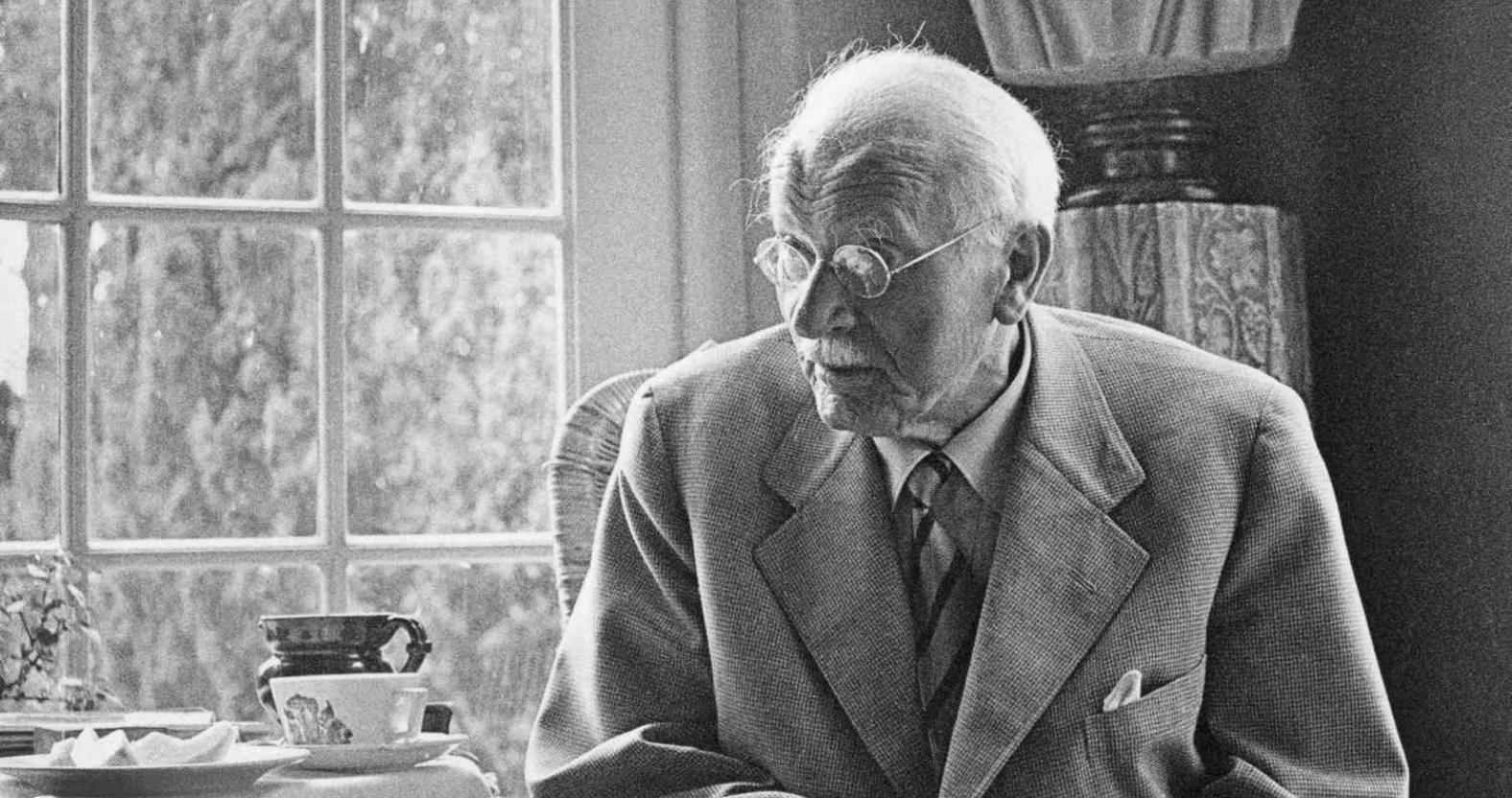
Carl Jung proposed that becoming a whole person means recognising that we contain contradictions.
I had to learn this firsthand through weekly therapy. When I initially started, I naively thought: Great, I’ll just do this and I’ll be fixed. But personal growth isn't a linear checklist. I came to realise that many of the issues I wanted to fix actually stemmed from deeply ingrained perceptions I held around how a situation should be handled, whether shaped by learned family behaviour or external observation.
We see these hidden scripts play out all the time. In a heated disagreement, an automatic reaction might tell us to shout back because we associate shouting with authority. In truth, reframing that view allows us to see that shouting doesn't equal authority, and that true strength lies in navigating the conflict calmly. We see it in parenting, too, where repeatedly allowing boundaries to slip and then aggressively trying to correct them becomes a loop of frustration rather than an expression of calm, consistent values.
If we want to practise virtue when life gets hard, we first must develop self-awareness. Maturity isn't about pretending we are perfectly balanced. It's about becoming conscious of these reactive patterns, so they stop unconsciously dictating our behaviour. We don't need to become a perfectly polished version of ourselves; we just need to become more deliberate about who we want to become.
I've found that some of my clearest thinking about this happens in ordinary moments. Conversations with friends. Driving home. Training at the gym. Sitting quietly when there's finally nothing demanding my attention.
Those moments have made me realise that becoming the person I want to be is entirely about direction. If I say I value kindness, courage, honesty and self-respect, then those virtues need to mean something when I'm angry, hurt or afraid. Otherwise, they're just words.
So, I've started asking myself a simple question: If somebody followed me around for a week, would they know what my values were?
Would they see them in the way I speak to people? In how I treat my family? In how I behave when I'm frustrated? In the boundaries I maintain?
Because ultimately, our values aren't defined by what we say we believe. They're revealed by what we repeatedly do.
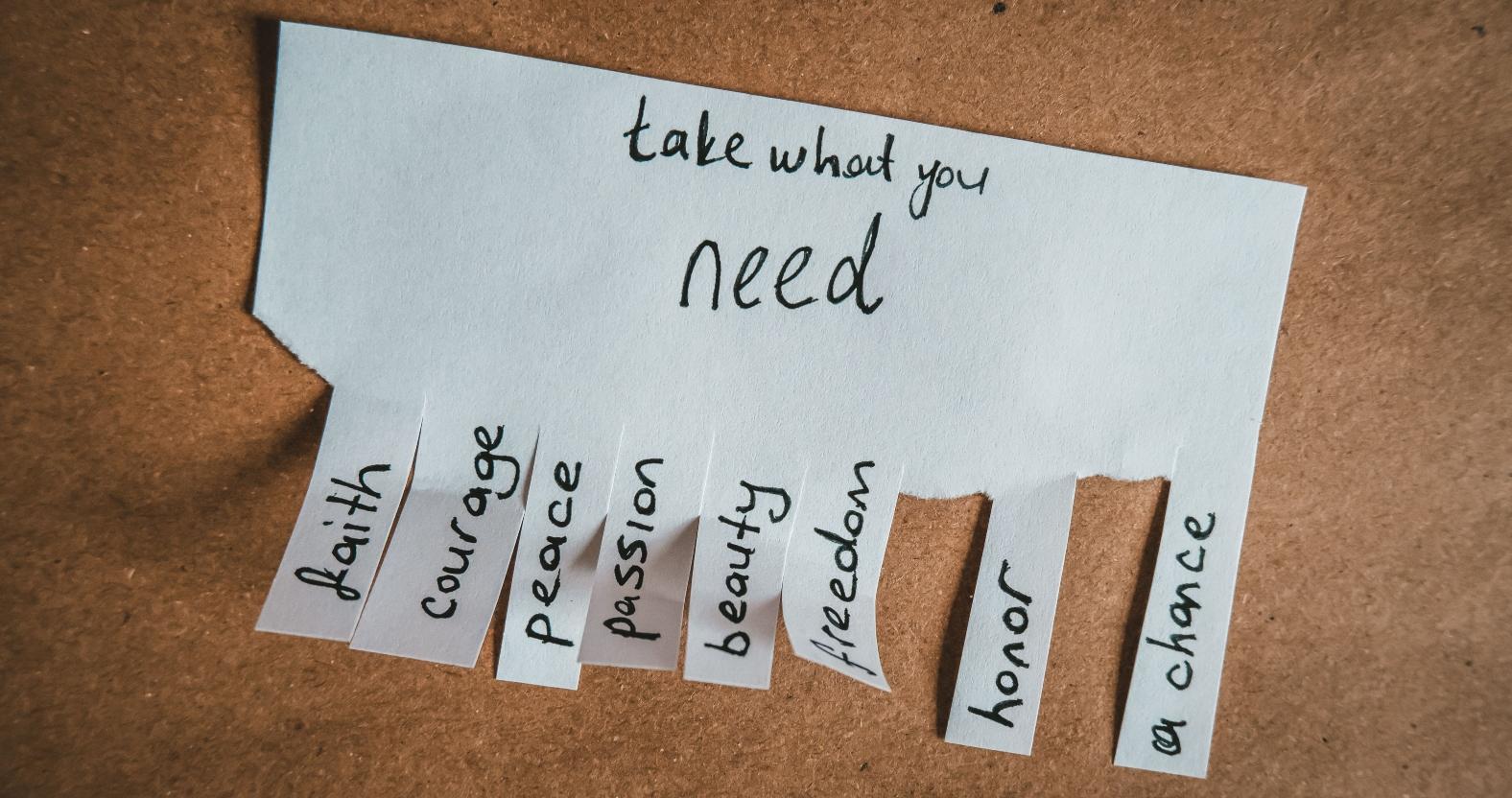
We all have our values.
A friend of mine gave me a wonderful but subtle example of what this looks like in practice. When multiple people are trying to talk over one another in a conversation, she will calmly say, "I'm struggling to hear everyone. Let me just listen to one person first, and then you have my full attention." I found this powerful because it shows active consideration and deep presence. Rather than reacting to the chaotic noise around her, she uses that small pause to deliberately choose respect.
We can apply this exact same approach to the internal noise we experience. When difficult emotions arise, our instinct is often to fight them, to push them away, suppress them or try to make them disappear. But perhaps the goal isn't to eliminate every uncomfortable feeling. Perhaps it's to become better at sitting with them without allowing them to take control.
We cannot always choose what we feel. We can, however, become more deliberate about what we do with those feelings.
We can feel anxious without letting anxiety make every decision. We can feel frustrated without becoming cruel. We can feel hurt without turning that hurt into harm.
The feeling doesn't have to disappear before we can choose how we respond to it.
So, what kind of person do you want to be?
Not someone who never gets angry or hurt. Not someone who always makes the right decision or is permanently in control. Just someone who, when given that small space between feeling and doing, becomes increasingly capable of choosing who they want to become.
For your mental health, North Yorkshire Talking Therapies offers a self-referral service through its website or by telephone, providing a range of courses and cognitive behavioural therapy.
If coping mechanisms have developed into substance dependency, North Yorkshire Horizons can offer specialist support.
If you are experiencing a mental health crisis, call NHS 111 and select option 2 to speak with the Mental Health Crisis Team or call the Samaritans on 116 123.

1