Subscribe to trusted local news
If you are accessing this story via Facebook but you are a subscriber then you will be unable to access the story. Facebook wants you to stay and read in the app and your login details are not shared with Facebook. If you experience problems with accessing the news but have subscribed, please contact subscriptions@thestrayferret.co.uk. In a time of both misinformation and too much information, quality journalism is more crucial than ever. By subscribing, you can help us get the story right.
- Subscription costs less than £1 a week with an annual plan.
Already a subscriber? Log in here.
26
Sept
The ex-soldier who has restored 1,800 military graves – because somebody should
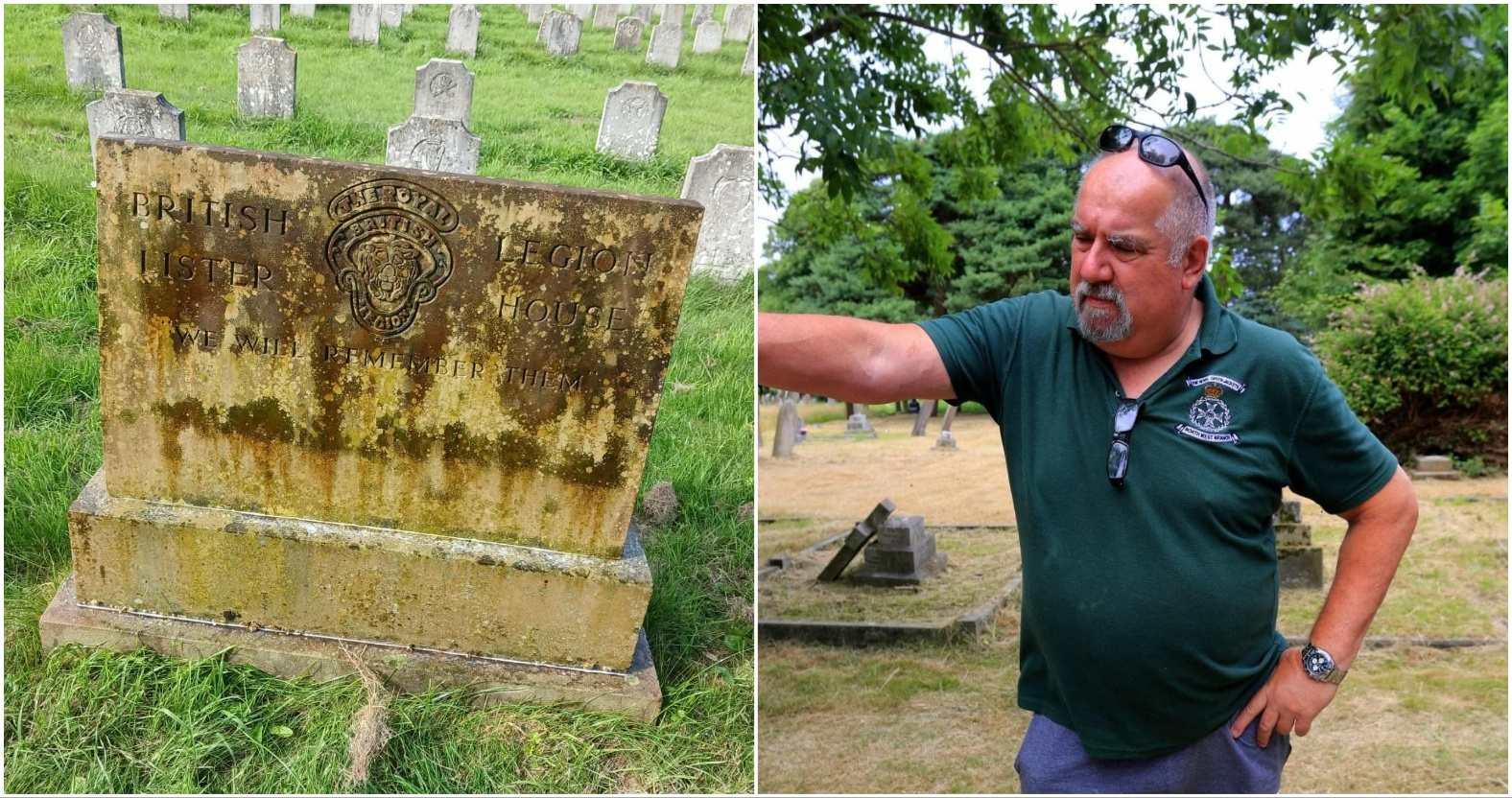
When Steve Davies found the overgrown grave of an 18-year-old soldier from the First World War, he didn't do what most people do: reflect on a tragic loss and then forget about it.
He resolved to do something. The next day, he went back to the graveyard with cleaning equipment and restored the headstone to how he felt it should look: cared for. Remembered.
That was eight years ago, and since then the Kent man has restored about 1,800 military graves, including those of 87 Victoria Cross recipients, plus 54 war memorials and six statues.
Needless to say, it's become a passion, and he travels all over the country to honour men and women who died in the service of their country.
His work has taken him to Devon, Cornwall, Jersey, Scotland – twice – and next year, he's off to Gibraltar and Monte Cassino in Italy.
But this week, he's been at St John's Church in Sharow, cleaning the graves of 240 British ex-servicemen who died in the British Legion-run Lister House in nearby Ripon.
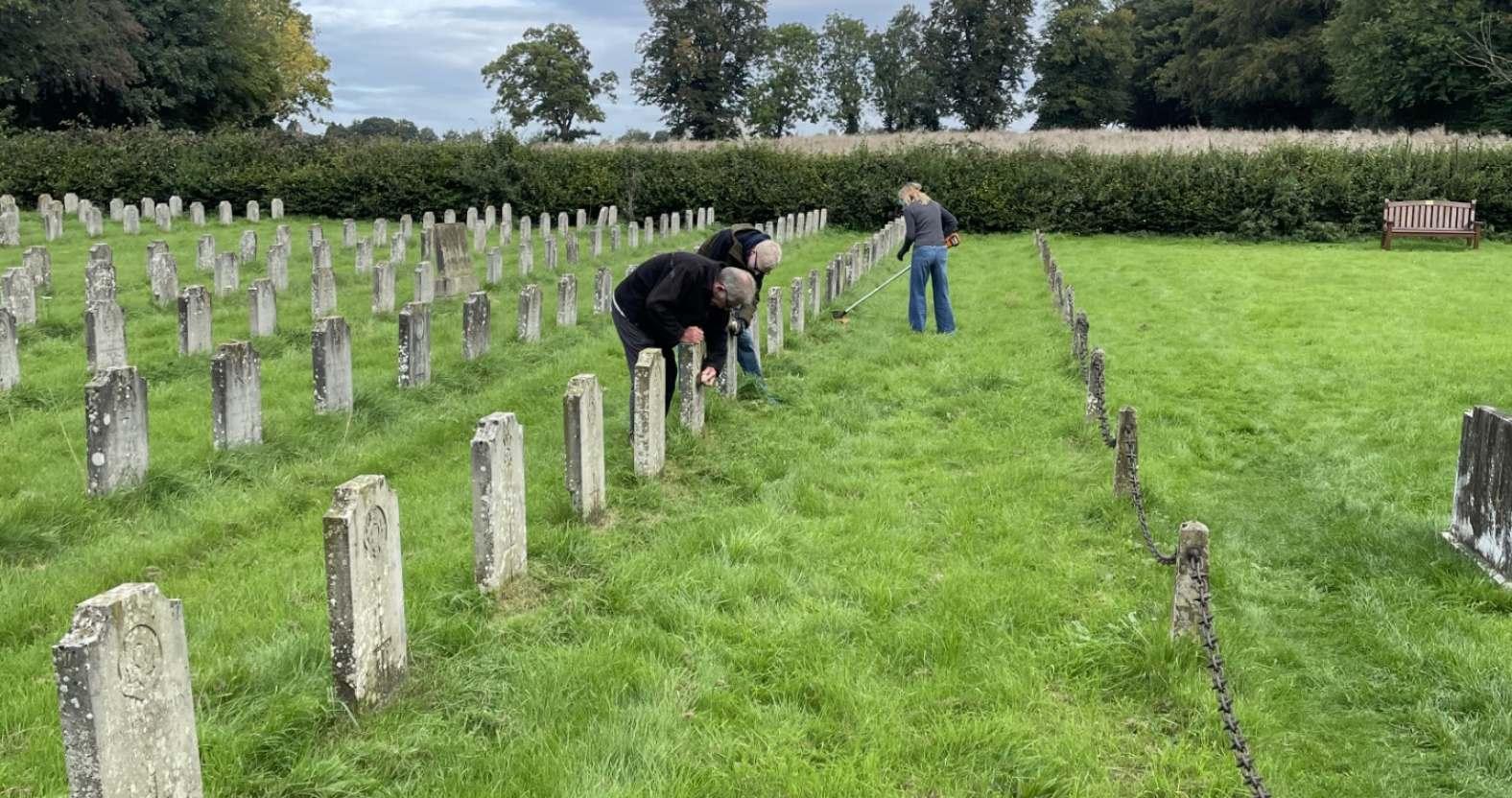
Eight local volunteers turned out to help Steve clean 240 graves in Sharow.
He told the Stray Ferret:
The Royal British Legion memorial stone says 'We will remember them' – but they're not remembering them, are they? If they were, they'd do more to maintain the graves.
I'm angry about it, but I'm doing something about it.
Steve doesn't charge for the restoration – he does it all voluntarily – but his work also does him some good too.
He said:
I served seven years in the army in Northern Ireland in the 1970s, when things were really bad there, and I did things and had things done to me that still haunt me to this day.
I suffer from complex PTSD (post-traumatic stress disorder), depression and anxiety, but I've found that doing this takes my mind off all those other troubles, because I can take ownership of the grave I'm working on.
Actually doing the work is a skilled operation, and Steve has put himself through training to become fully accredited by the British Register of Accredited Memorial Masons (BRAMM). He's also trained "probably 300" people to clean headstones, and put eight through the first stages of training as memorial stonemasons.
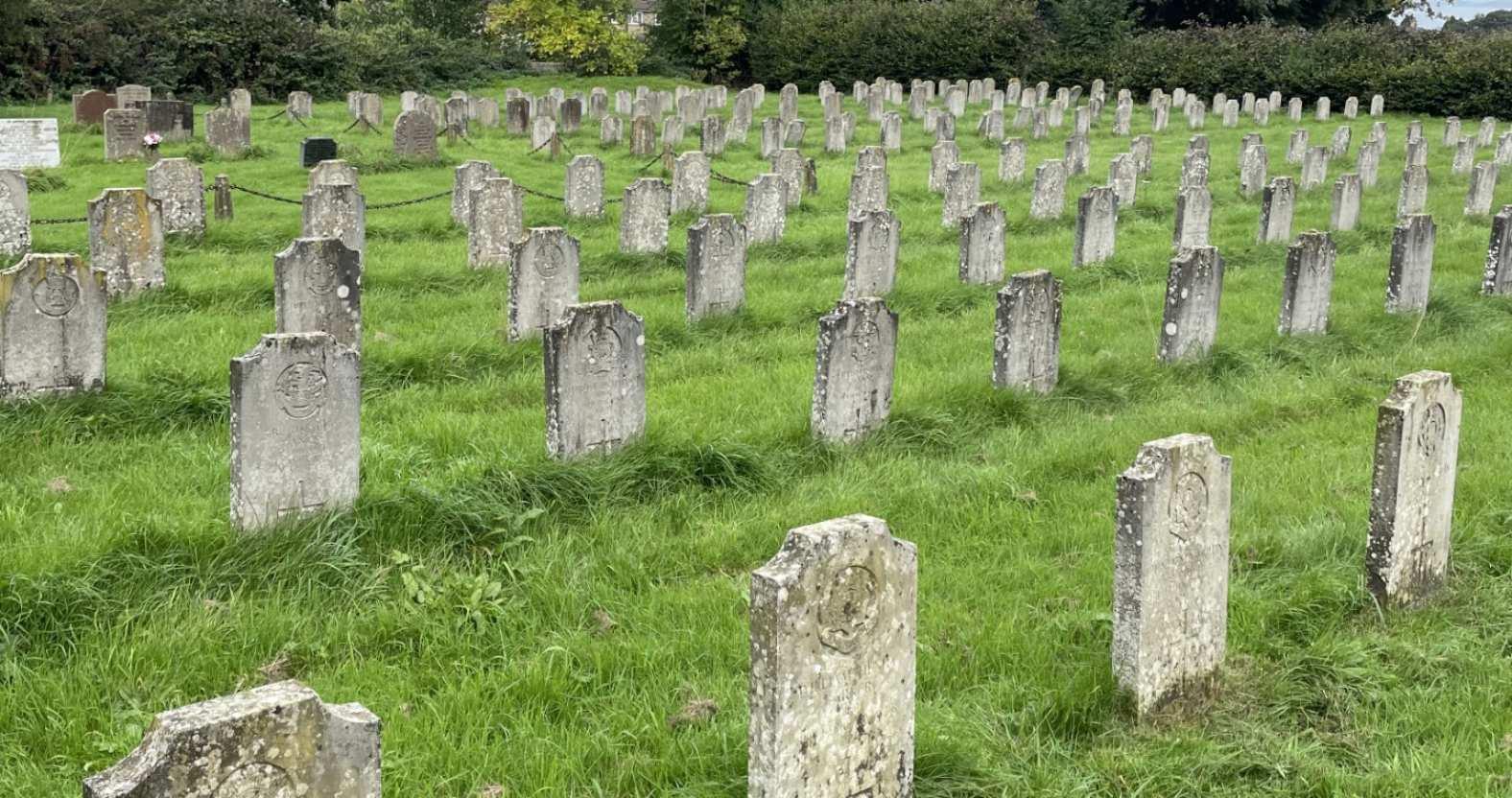
The military graves at Sharow before Steve's visit...
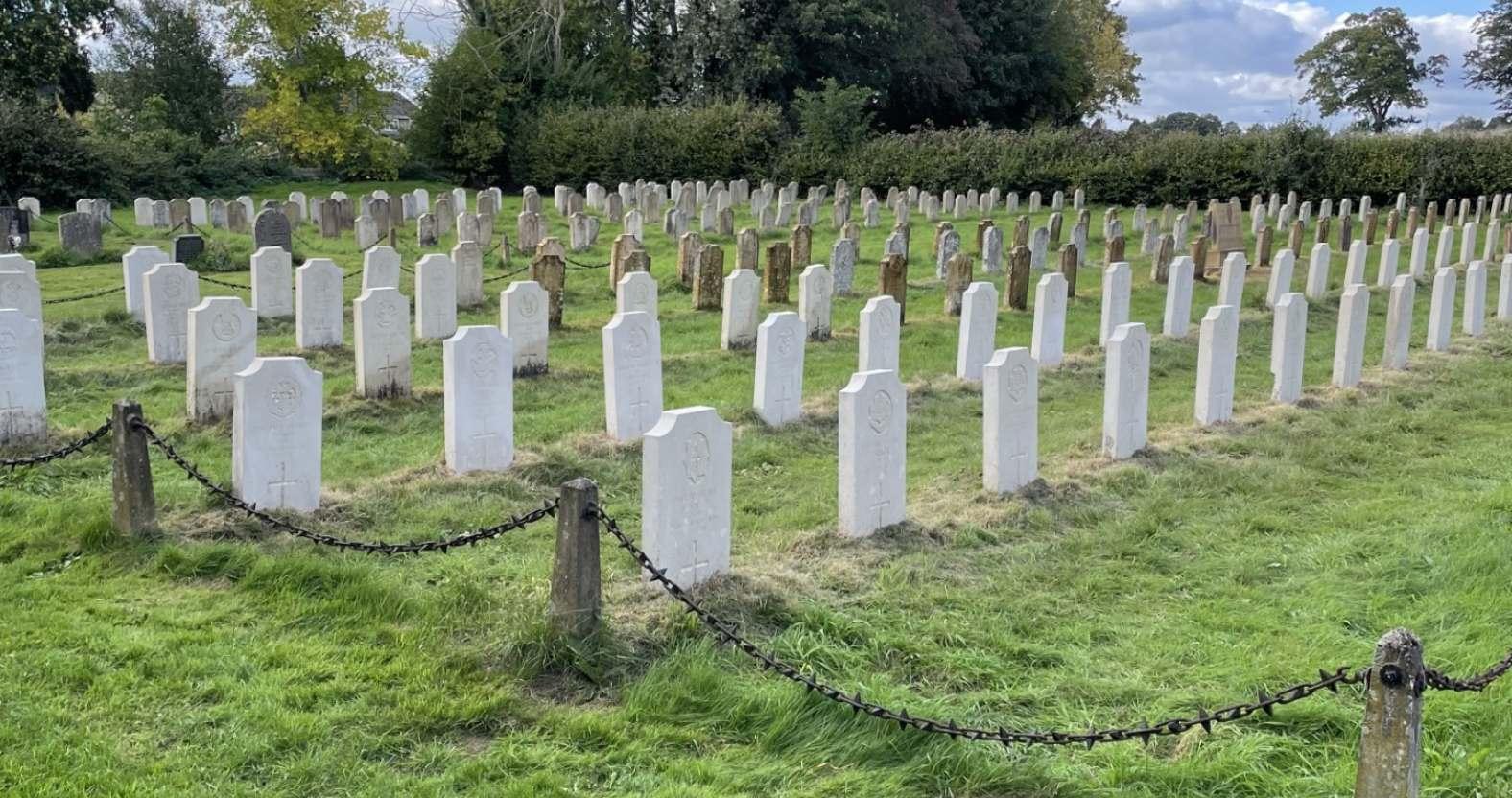
...and after restoration by Steve and his volunteers.
But just as he helps others, so others help him. He said:
First, we use a plastic scraper to get off all the lichen, then we use water and natural bristle brush. The worst thing to get off is the black spot. Portland stone is porous, and it gets right in.
We use headstone cleaner by a Dutch company called HG. The UK sales director saw we were using it in one of our videos on Facebook, and got in touch to offer us an unlimited supply, so we get all that free of charge.
Another company called Worx give us all our tools free – drills, water washers, strimmers and the like.
Other than that, Steve's costs are met by donations through his JustGiving page, which funds a full-time researcher, his accountancy and IT facilities, plus all the databases he subscribes to, because, he says, "we like to find the families".
His work has introduced him to a near endless supply of fascinating figures from history. Four years ago, he found the grave of the last survivor of the Battle of Waterloo, and last year, he installed a new headstone for Dorothy Lawrence. A journalist, she was the only woman to serve as a soldier in the trenches of the First World War.
Steve said:
Somehow, Dorothy managed to find her way to the Front and get hold of a uniform, and she was there for two weeks working with a company of Royal Engineers tunnellers before she declared she was a woman. She was treated as a spy and ended up in an asylum from 1925.
She died in 1964, and was buried in a pauper's grave with nine other people. But last year the Royal Engineers arranged for a new headstone to be put up – to Sapper Dorothy Lawrence.
My researcher found three members of her family who never even knew she existed.
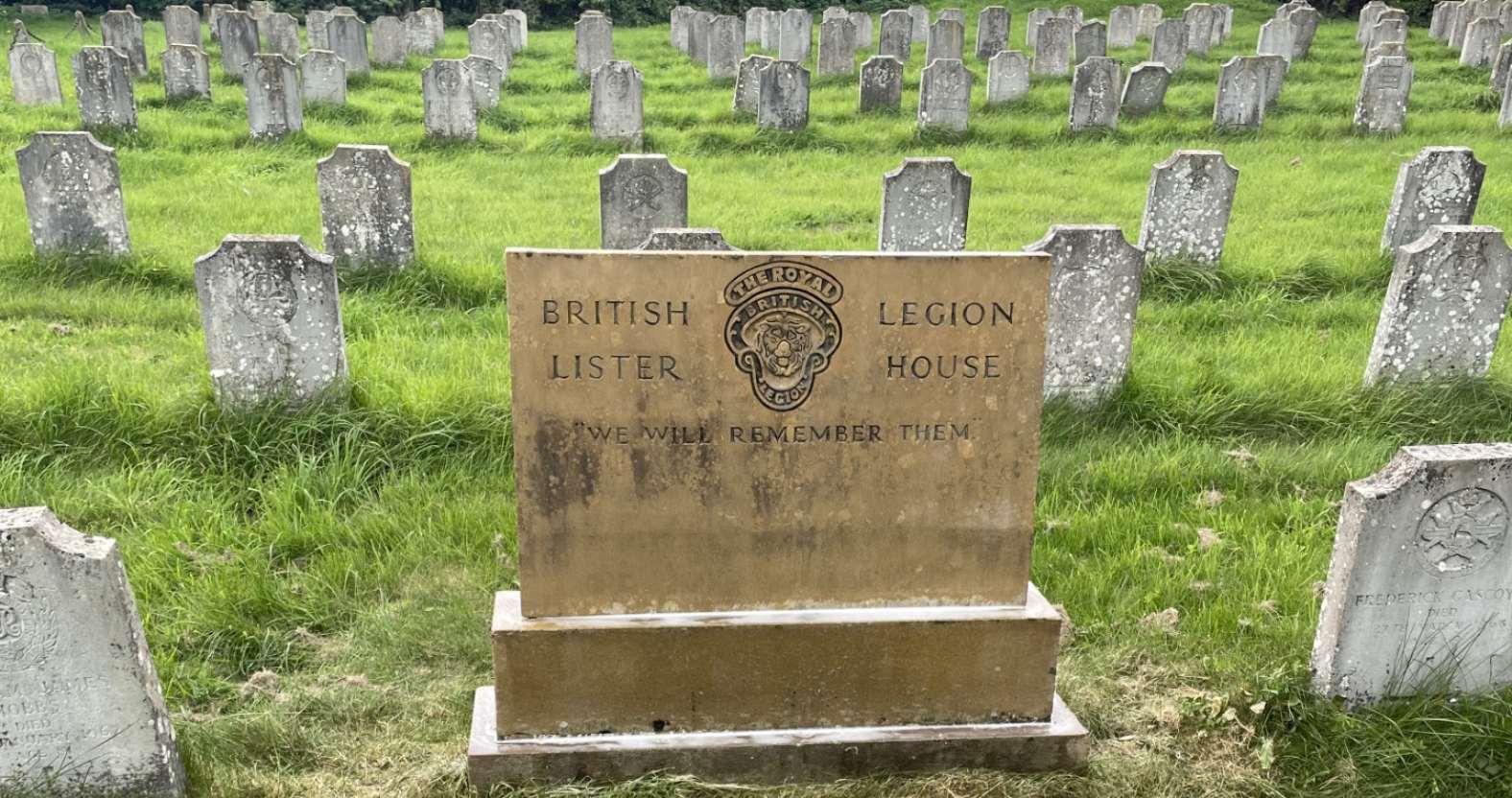
The Royal British Legion marker stone after cleaning.
All being well, Steve and his volunteers will complete their 240-grave mission at Sharow this morning, and after that he'll move on – to the New Forest on Monday, then Devon for three days.
Then I'm off to Normandy for the memorials on the beaches. I'm keeping busy!
But I don't do it for the money – there isn't any. I do it because I love doing it. And because somebody should.

0