Thank you for your interest in this story
To continue reading this article, subscribe to the Stray Ferret for as little as £1 a week
Already a subscriber? Log in here.
07
Nov
Should community value count for more than commercial viability?
Vicky Carr is a journalist turned writer who grew up in Harrogate and returned in her late 20s to raise her family here. Find her on Instagram @vickycarrwrites.
I love a good community campaign.
When people come together to fight for something that’s important to them, the power they wield can be fearsome.
We’ve seen it around the Harrogate district over the years when valuable community assets have been under threat. From residents rallying to save their village pubs to suburban groups uniting in support of local libraries, it’s heartwarming to witness the results that can be achieved through the combined efforts of people with a shared love of their community.
Almost 20 years ago, those efforts helped to save the Post Office on Cold Bath Road. The campaign included a march from its doors to the town centre, demonstrating the distance locals would have to travel to reach the next nearest branch. It was a powerful message which achieved its aim (at least at the time – sadly, the branch closed a decade later).
In the last 10 days, we’ve heard Harrogate’s town centre Post Office could be at risk, as retailer TG Jones (formerly WH Smith), which has been home to the service since 2019, plans further branch closures.
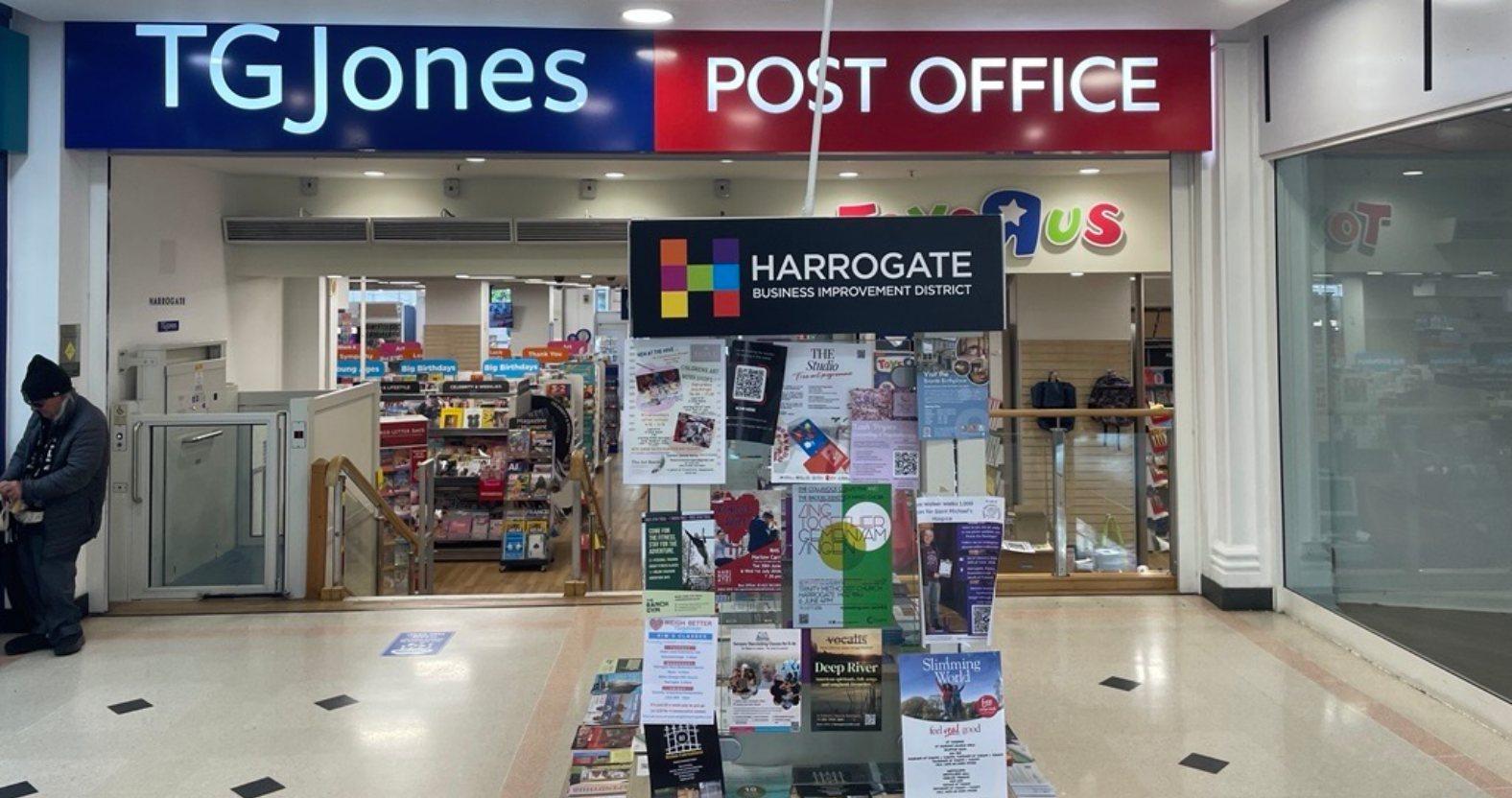
TG Jones in Harrogate.
Ripon’s store is among those on a list of confirmed losses – though unlike Harrogate, it doesn’t house a Post Office.
The potential closure of a long-standing shop is never good news – but the consequent loss of a community service is more troubling.
We’ve seen similar threats to banks in recent years. Maintaining branches in smaller communities has become difficult as online banking has grown, but closing them down leaves people without easy access to counter services when they do need them.
To mitigate this, a cooperative model has been established, with banking hubs offering access to multiple providers in one location.
Indeed, there is one in Knaresborough’s Post Office – a prime example of businesses working together to ensure continuation of services in a more cost-effective way. As well as postal services, customers of Lloyds, Halifax, Barclays, HSBC, Santander and NatWest can all access banking support on specific days of the week.
It’s an excellent demonstration of cooperation in the interests of the public, maintaining services that are not viable independently, while also meeting new Financial Conduct Authority rules about community access to banking services.
But does the same principle apply in every situation?
What counts as a public service?
What counts as a public service that should be run at a loss, or sustained with public money, rather than a private enterprise that can be allowed to fail – even if its failure harms the community?
Earlier this year, Marks & Spencer confirmed that it plans to close the café at its Oatlands food hall.
There was a public outcry. How could it close such a valued facility, which means so much to locals and is always busy?
Even Tom Gordon MP got in on the act, after he heard from constituents about the “essential, accessible facility”, writing an open letter to M&S calling for the decision to be reconsidered.
Like many, I was initially surprised by the plans. It is indeed always busy: on the odd occasion I’ve taken my children there for a snack before swimming lessons, or met someone for a coffee, it has often been hard to find a vacant table.
But is this proof of success? Last time I was there, at 4pm on a Tuesday in October, once again I was standing with a tray of food and drinks, waiting for a table.
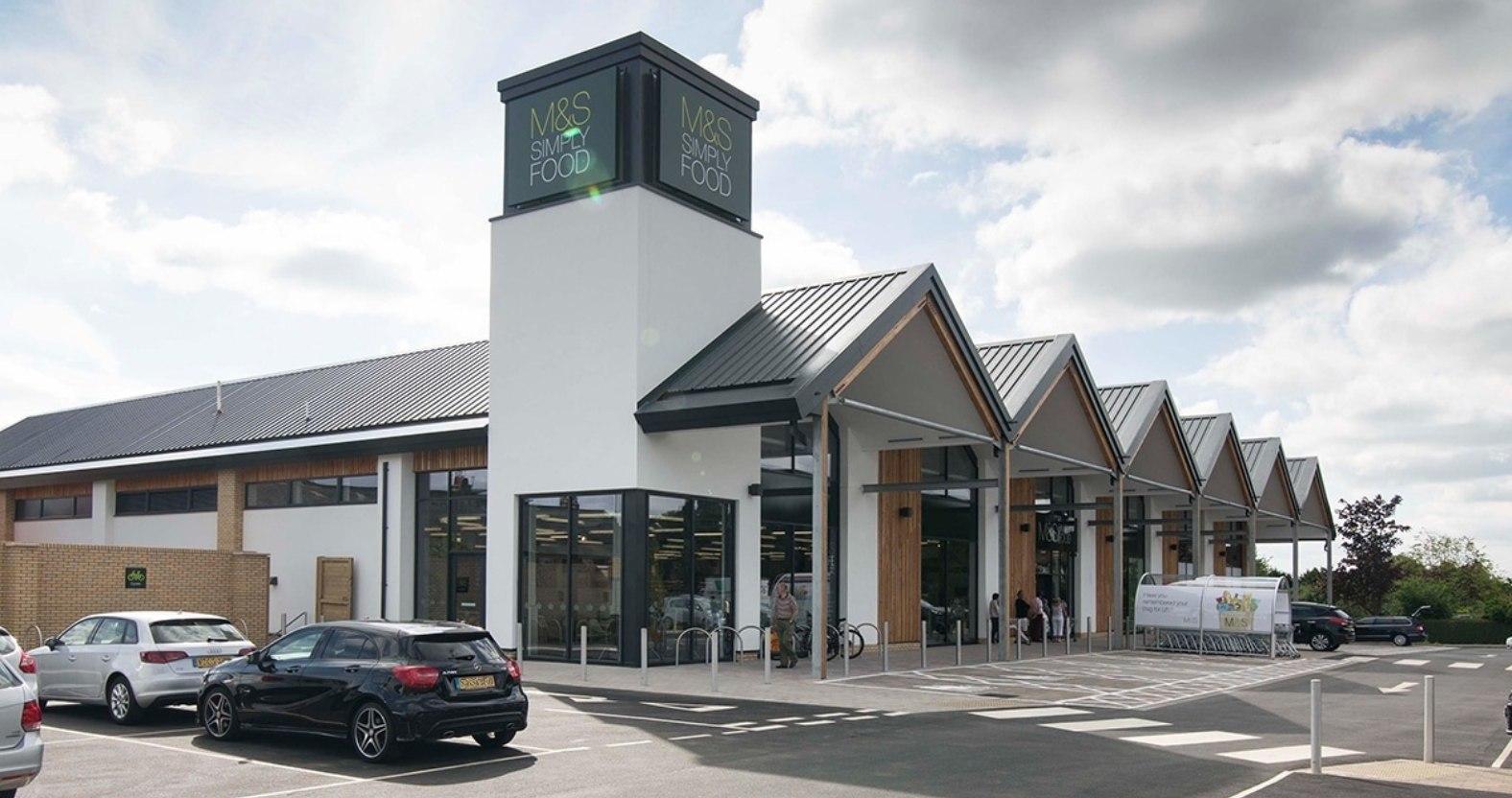
M&S on Leeds Road in Harrogate.
There were many older people there, enjoying a long catch-up with friends or treating grandchildren to an after-school biscuit. Some tables were occupied by people working on laptops, a single empty coffee cup by their elbow. One lady placed her coat over a seat to reserve the table, preventing anyone else from using it while she spent 20 minutes queuing, choosing and ordering.
So while it looked busy, there was very little turnover of customers, and not much money being spent.
The café has already been saved from closure once. Four years ago, during the last refurbishment, M&S proposed scrapping it – but relented in the face of public opposition.
Since then, its lack of enthusiasm for the facility has been rather obvious.
Tables have been squashed further and further into the corner, with a new cake-stand-slash-waste-disposal unit taking up a huge chunk of central floor space. Access for pushchairs and wheelchairs is all but impossible beyond the first couple of seats.
Everything is disposable – cardboard, paper and wood as far as the eye can see – yet there’s no option for recycling anything other than glass, food and liquids. The “recyclable” cups and plates are chucked in an “everything else” bin, which is, more often than not, overflowing.
This is not just any café experience. This is the M&S Oatlands café experience.
Yet clearly, locals still love it – doubtless at least in part because of the staff, who are unfailingly welcoming and helpful, despite the challenging set-up.
But should M&S have to keep a café it doesn’t love, just because the public does?
'Important social hub'
Tom Gordon describes it as an “important social hub” – and while that may be true, the implication is that the company should keep it open, even if it’s losing money.
But if the rest of the shop – and indeed the company as a whole – is profitable enough to cover any losses made by the café, is there an argument for keeping it purely because of the community value it offers?
When we’re compelling banks (which are also, at the end of the day, commercial operators) to maintain a presence on the high street, marching to save Post Offices from closure, and fighting to keep village pubs and libraries open, perhaps it’s not such a leap to ask a large company to use some of its profits to run small café that makes life just a bit brighter for local people.
So should community value take precedence over commercial viability?
It’s a tricky question. And I’m glad I’m not the one making the decision.

1