Subscribe to trusted local news
If you are accessing this story via Facebook but you are a subscriber then you will be unable to access the story. Facebook wants you to stay and read in the app and your login details are not shared with Facebook. If you experience problems with accessing the news but have subscribed, please contact subscriptions@thestrayferret.co.uk. In a time of both misinformation and too much information, quality journalism is more crucial than ever. By subscribing, you can help us get the story right.
- Subscription costs less than £1 a week with an annual plan.
Already a subscriber? Log in here.
22
Sept
More funding, worse roads: report lays bare state of North Yorkshire highways
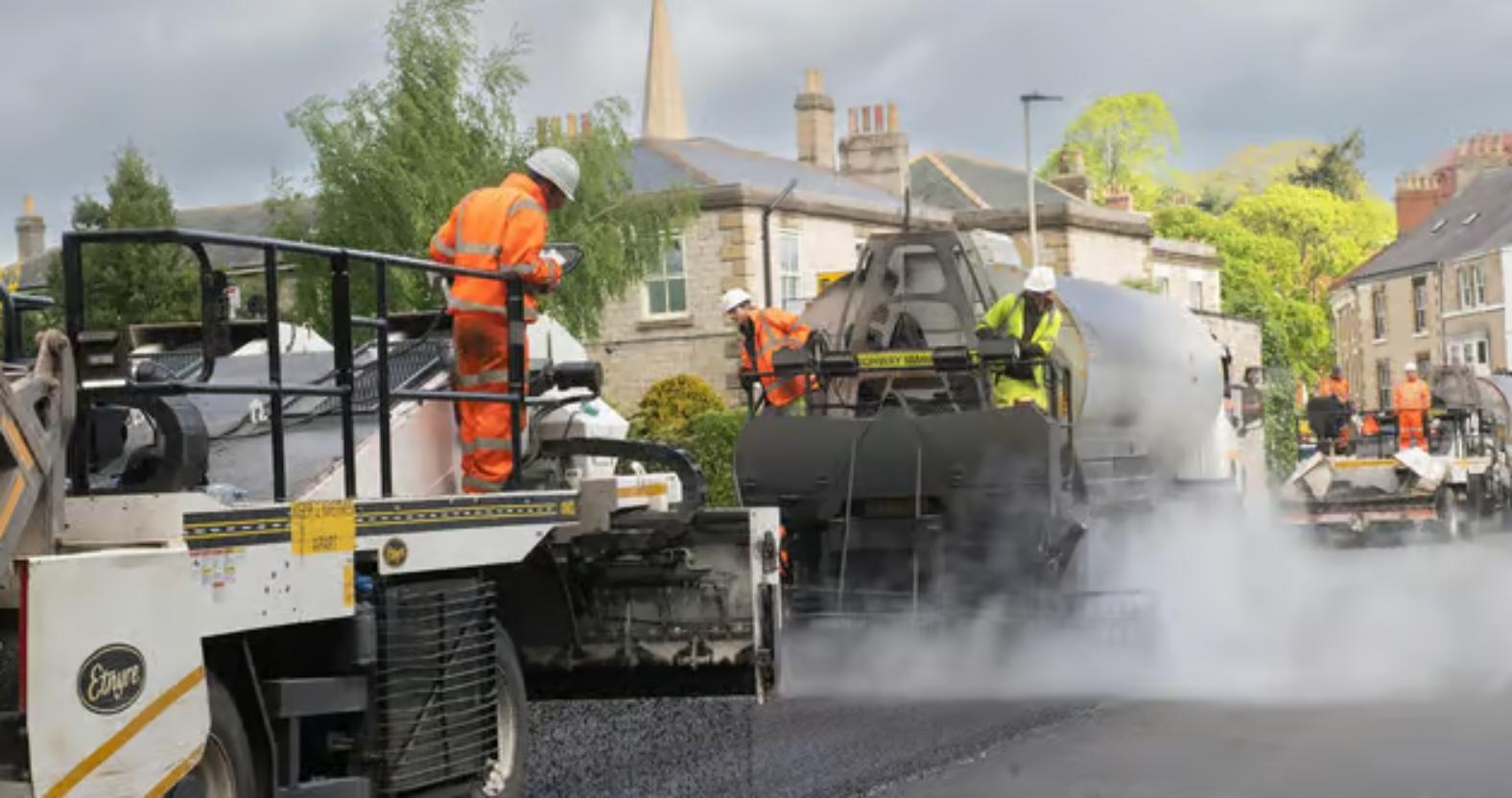
A report on the state of North Yorkshire’s roads has revealed that highways funding has gone up — but the quality of roads has gone down.
North Yorkshire Council’s highways maintenance transparency report outlines how funding is spent.
The council must publish the report each year or risk losing funding from the Department for Transport.
The Stray Ferret has analysed the 26-page document, which you can read in full here, to summarise the key findings.
Here are six key takeaways.
1 Roads are getting worse
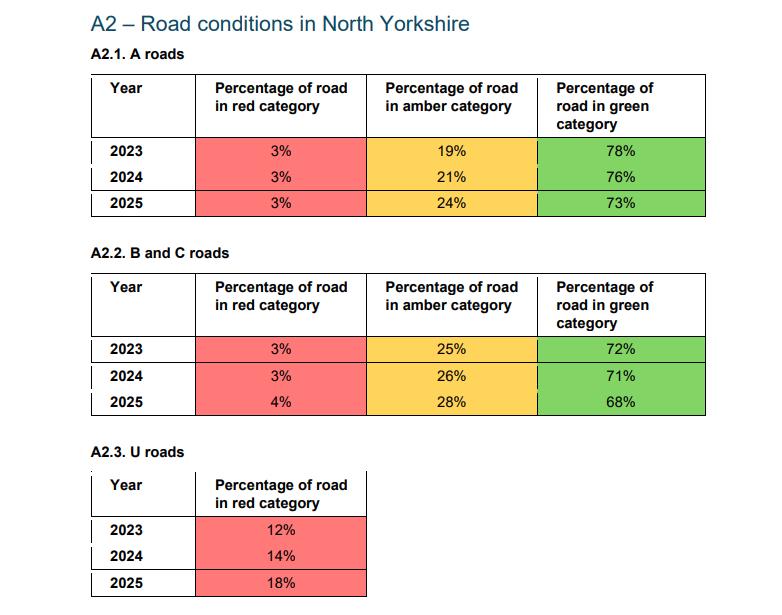
Roads are categorised green, amber or red, according to their state. Green means good condition; amber means maintenance may be required soon; and red means poor condition.
The percentage of unclassified roads categorised as red increased from 12% to 18% between 2023 and 2025. The percentage of B and C roads categorised as red went up from 3% to 4%. Although the red figure for A roads has remained at 3%, the percentage of roads in the amber category has gone up while the percentage of roads in the green category has gone down.
2 Funding up 29%
Spending on highways maintenance has increased from £83.6 million in 2024/25 to a projected £107.9 million in 2026/27 — a 29% uplift. There has been much controversy over the decision by David Skaith, the Labour mayor of York and North Yorkshire, to give a greater share of the highways pie from 2026 to 2030 to Labour-run City of York Council at the expense of Conservative-controlled North Yorkshire Council. Nevertheless, overall funding is up for both local authorities. Whether this translates to better roads in the years ahead remains to be seen.
3 10,000 holes
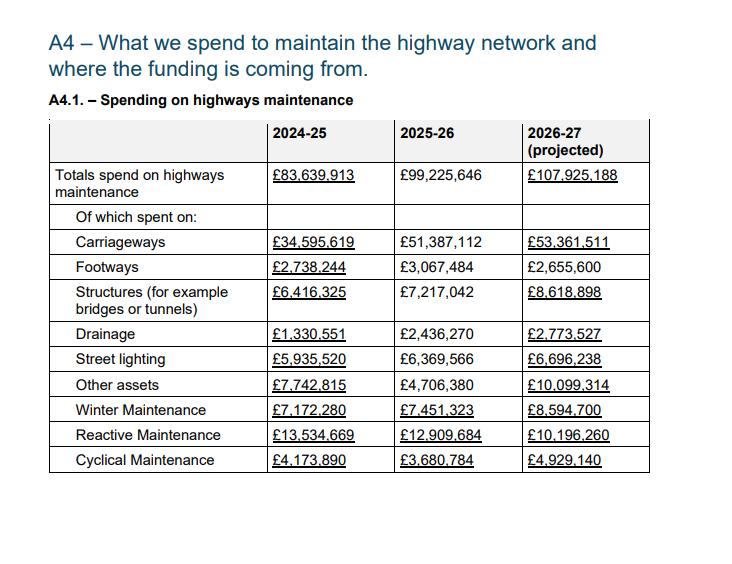
A higher proportion of the highways budget is being spent on carriageway repairs, which primarily relate to potholes. They accounted for £34.6 million of the £83.6 million spent in 2024/25 — a total of 41%. In 2026/27, they are expected to swallow up 49% of the £107.9 million overall sum. In 2025/26, the council carried out 10,513 works orders linked to pothole repairs. The only areas to see reduced funding are reactive maintenance and footways.
4 Two-hour pothole repairs
The report outlines the procedure for repairing potholes, which can be reported here. It says:
“If a pothole defect has been identified as a category 1 defect which poses an immediate threat to road users' safety, subject to a risk assessment by the attending highway officer, the defect will be made safe or repaired within 2 hours. For category 2 defects which do not pose an immediate threat to road users’ safety, the attending highway officer will make provisions to make the area safe within a planned programme of works within 7 – 90 days as determined by the guidance contained in the risk assessment matrix.”
5 Harrogate roads get more investment than Ripon
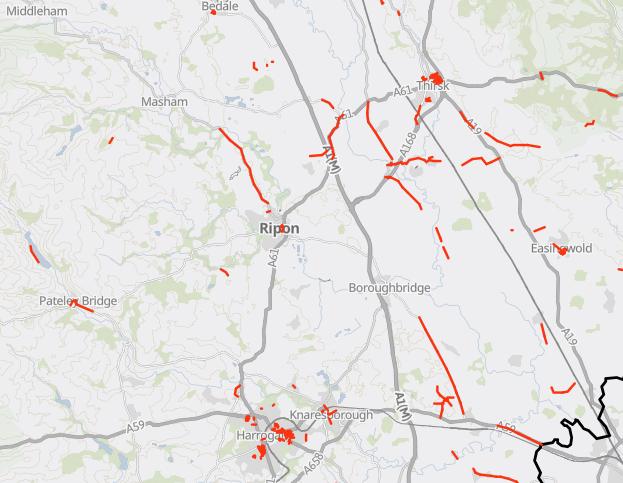
The red lines indicate roads due for upgrades this year.
The map of planned carriageway and footway works planned in 2026/27 highlights what the Stray Ferret reported in March — that roads in Harrogate and Knaresborough will get more spent on their roads than in Ripon in 2026/27. Dallamires Lane was recently added to the list — but besides this, Ripon has been largely overlooked. Boroughbridge and Masham also fare badly.
6 Maintaining 9,000 kilometres of roads
The report highlights the scale of the challenge facing NY Highways, the council-owned company that carries out work on the roads. North Yorkshire has one of England’s largest and most diverse highway networks. The local authority is responsible for maintaining 9,200 kilometres of roads, 3,043 kilometres of footways, 2,000 bridges and structures and 50,000 streetlights.

1